Home / Athletes / ACL Injury Prevention

ACL Injury Prevention: The Best ACL Surgery Is the One You Never Need

By Dr. Shayne Kelly, DO — Fellowship-Trained Sports Medicine Surgeon · Tri-City Orthopedics, Kennewick, WA · Published July 26, 2026

A practical guide for parents, coaches, and athletic trainers: the three published warm-up programs shown to cut ACL injury risk — and how to actually run one.

Educational information, not medical advice. This is not a substitute for the specific instructions Dr. Kelly and your physical therapist give you. Your timeline depends on your surgery, your body, and your progress. Follow your own care team's directions. In an emergency, call 911.

I grew up playing three sports at Pasco High — football, basketball, and soccer. In 2007 our soccer team won the state championship. Now I'm back home as a sports medicine surgeon, and a real part of my week is reconstructing torn ACLs for athletes from the same fields and gyms I grew up on.

So here's something you don't often hear from a surgeon: an ACL injury prevention program — a structured 10-to-20-minute warm-up, done two or three times a week — is one of the best-supported interventions in all of sports medicine. In published studies, these programs cut ACL injury risk roughly in half. Most teams still don't run one. This page exists to change that for our teams.

The prevention gap: we got good at fixing ACLs, not at preventing them

Orthopedic surgery has spent decades getting very good at ACL reconstruction. What the field has under-invested in is keeping athletes off the operating table in the first place — a gap sports medicine leaders have been calling out publicly, because the numbers make the case on their own:

  • ACL injuries are common. Commonly cited published estimates put ACL injuries in the United States at more than 200,000 per year.
  • Most don't involve a collision. Published studies report that roughly 70% of ACL tears are non-contact — no tackle, no pile-up. Just a plant, a cut, or a landing that goes wrong in a fraction of a second.
  • A large share is preventable. A published meta-analysis pooling the major prevention trials (Webster & Hewett, 2018) found neuromuscular training programs reduced the risk of all ACL injuries by about 50% in all athletes — and non-contact ACL injuries by about 67% in female athletes.

Be clear about what that means — and what it doesn't. No warm-up makes an athlete injury-proof, and individual results vary. But in medicine we rarely see published numbers this strong for something this cheap: no equipment, no medication, about 15 minutes of discipline before practice.

The catch is the word discipline. These programs only work when teams actually do them, week after week. That's why this page is written for the people who control the warm-up: parents, coaches, and athletic trainers.

Who benefits most from ACL prevention training

Every athlete in a cutting or jumping sport carries some ACL risk. Published epidemiologic studies report ACL injury rates roughly 2 to 8 times higher in female athletes than in males playing comparable sports.

Here's the part that matters more than that number: training moves it. The same published meta-analysis cited above found roughly a 67% reduction in non-contact ACL injuries in female athletes — the largest reduction that analysis measured in any group. Same warm-up, same fifteen minutes, biggest documented payoff. So this isn't a problem for female athletes to solve on their own; it's a program the whole roster runs together, and the athletes who start at higher risk are the ones with the most to gain.

Two other things raise risk for any athlete:

  • The teen years. Risk climbs after the adolescent growth spurt — roughly ages 13 to 18 — when athletes get taller, faster, and more powerful ahead of the coordination needed to manage it.
  • A previous knee injury. Any athlete who has already hurt a knee — either knee — is worth extra attention. If that's your athlete, start with our torn ACL guide and make sure the knee has actually been evaluated.

When should training start? Earlier than most people think. A published meta-analysis in female athletes (Myer et al., 2013) found neuromuscular training cut knee injury odds by about 72% in athletes 18 and under, while starting after age 18 showed no significant effect. Many authors recommend beginning around ages 11–12 — before the growth spurt, while landing habits are still forming. Individual results vary, and young athletes should progress under adult supervision.

The landing is everything: knee-over-toe vs. dynamic valgus

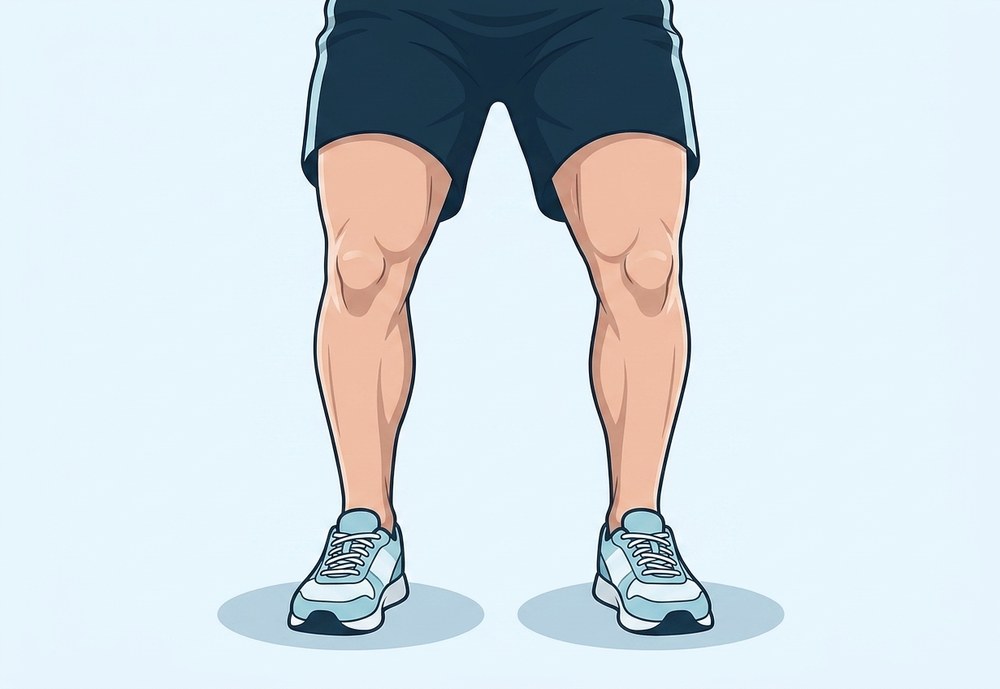
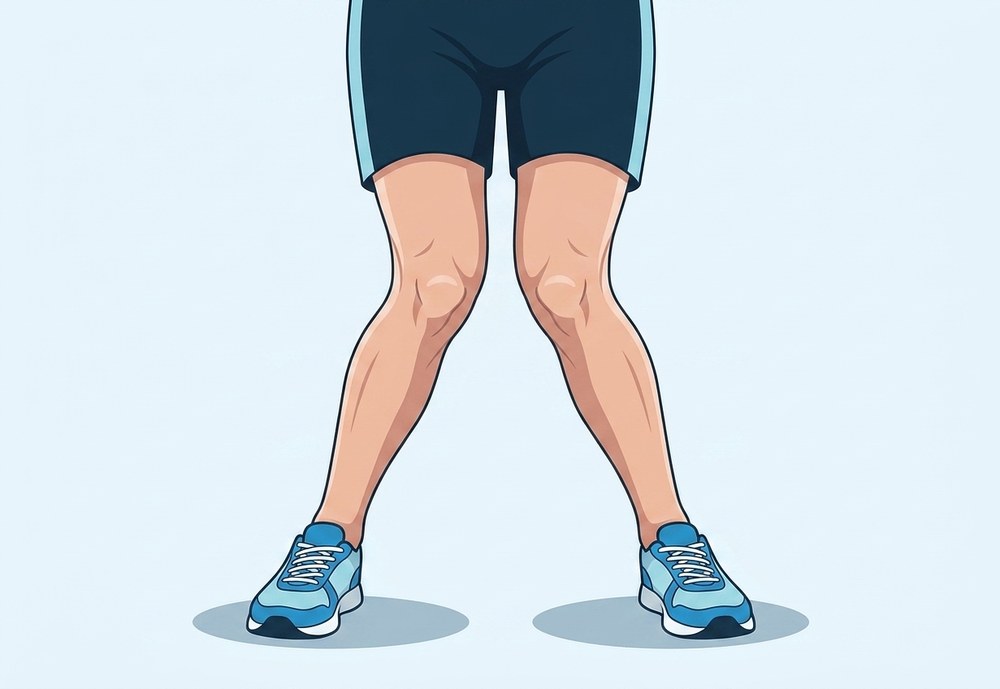
If you learn one thing from this page, make it this picture. Every program below is, at its core, teaching the position on the left and un-teaching the position on the right.

This is a movement habit, not a body type. Any athlete can land with the knees collapsing inward, and any athlete can train out of it. In a published prospective study (Hewett et al., 2005), athletes who landed with greater inward knee collapse went on to tear ACLs at significantly higher rates — which is why the pattern, not the person, is what these programs target.

✓ Safe landing Correct landing: the knees stay bent and track directly over the toes, with hip, knee and ankle in line
Hips back, knees bent, kneecaps over the toes. Hip, knee, and ankle stack in a straight line. The landing is quiet — weight on the balls of the feet, chest up.
✗ Dynamic valgus Knock-knee landing: the knees collapse inward toward each other while the feet stay wide apart
Knees cave toward each other while the feet stay wide. This “knock-knee” collapse under load is the classic position of non-contact ACL tears — and it's the pattern these programs retrain.

What to watch for from the sideline — no equipment needed, just eyes:

  • Listen to the landing. A quiet landing means bent knees and hips absorbing the load. A loud slap means a stiff, straight-leg landing.
  • Watch the kneecaps. On a jump landing or a quick cut, kneecaps should point the same direction as the toes — not dive toward each other.
  • Watch fatigue. Form that looks fine in the first ten minutes often falls apart late in practice. That's when the risky pattern shows up.
  • One knee is not a diagnosis. An athlete who consistently collapses inward has a trainable movement pattern, not a diagnosis. An athlete with pain, swelling, or a knee that gives way needs an exam, not more reps.

Program 1: The PEP Program (Prevent injury, Enhance Performance)

Santa Monica Sports Medicine Research Foundation
  • ⏱ 15–20 minutes
  • 🔁 3× per week, in place of the normal warm-up
  • ⚽ Built for soccer; works for field sports
  • 🌳 Field + a few 2″ cones — no other equipment

The PEP Program was designed by the Santa Monica Sports Medicine Research Foundation as a complete warm-up replacement. It runs five sections in a fixed order — warm-up (jogging, side shuttles, backward running), strengthening (walking lunges, Russian hamstring curls, single-leg calf raises), plyometrics (lateral hops, forward/backward hops, single-leg hops, vertical jumps, scissor jumps), agilities (sprint-and-decelerate runs, lateral diagonal runs, bounding), and stretching. Coaches run it off a field diagram; the published program guide spells out every drill.

Two details coaches consistently miss: the coaching cues are the program — straight up-and-down jumps, soft landings, knee never caving inward — and for athletes 12 and under, the program's own guidance keeps plyometrics over a flat line or 2-inch cone with two-foot landings only.

The evidence. In a published two-year study of 14-to-18-year-old female club soccer players (Mandelbaum et al., Am J Sports Med 2005), teams using PEP had an 88% lower ACL injury rate than matched controls in year one and 74% lower in year two. A randomized controlled trial across 61 NCAA women's soccer teams (Gilchrist et al., Am J Sports Med 2008) found a 70% lower rate of non-contact ACL injuries in trained teams — and zero non-contact ACL tears in practice among trained athletes, versus six in controls. As always: published group results, not individual guarantees — results vary.

PEP · Strengthening Athlete performing a walking lunge with an upright chest and the front knee stacked over the ankle
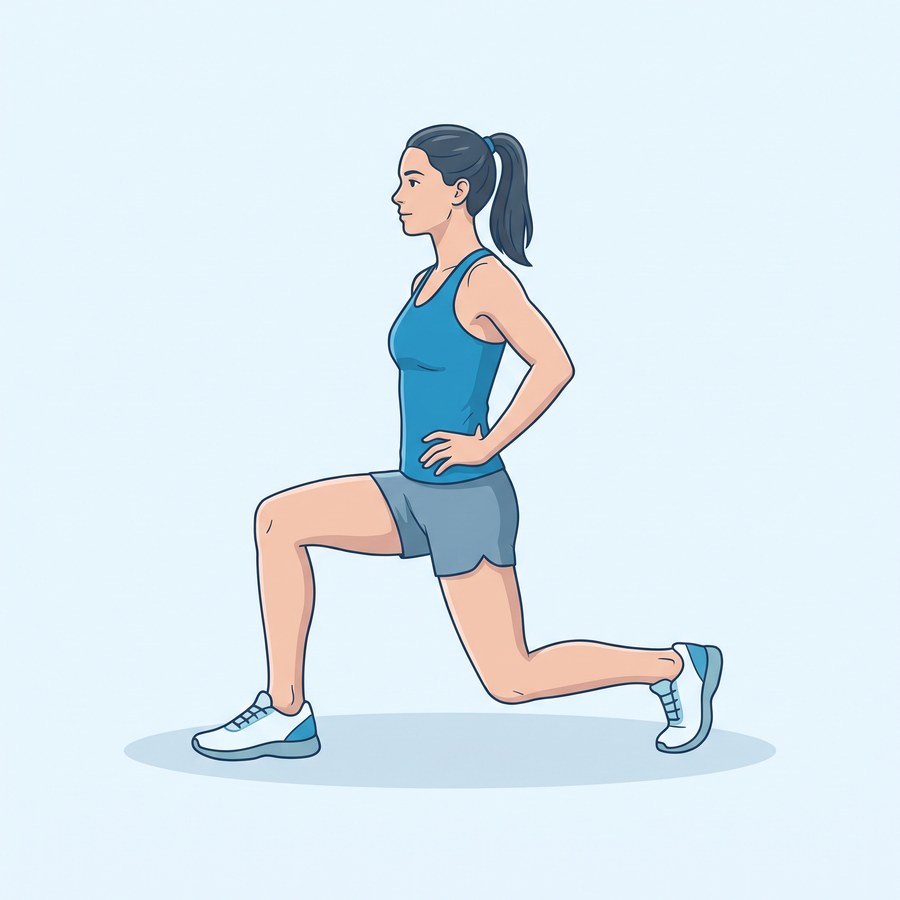
Walking lunge. Chest tall, front knee stacked over the ankle (never past the toes, never caving in), back knee dropping straight down.
PEP · Plyometrics Athlete hopping sideways over a small training cone with knees bent and body compact
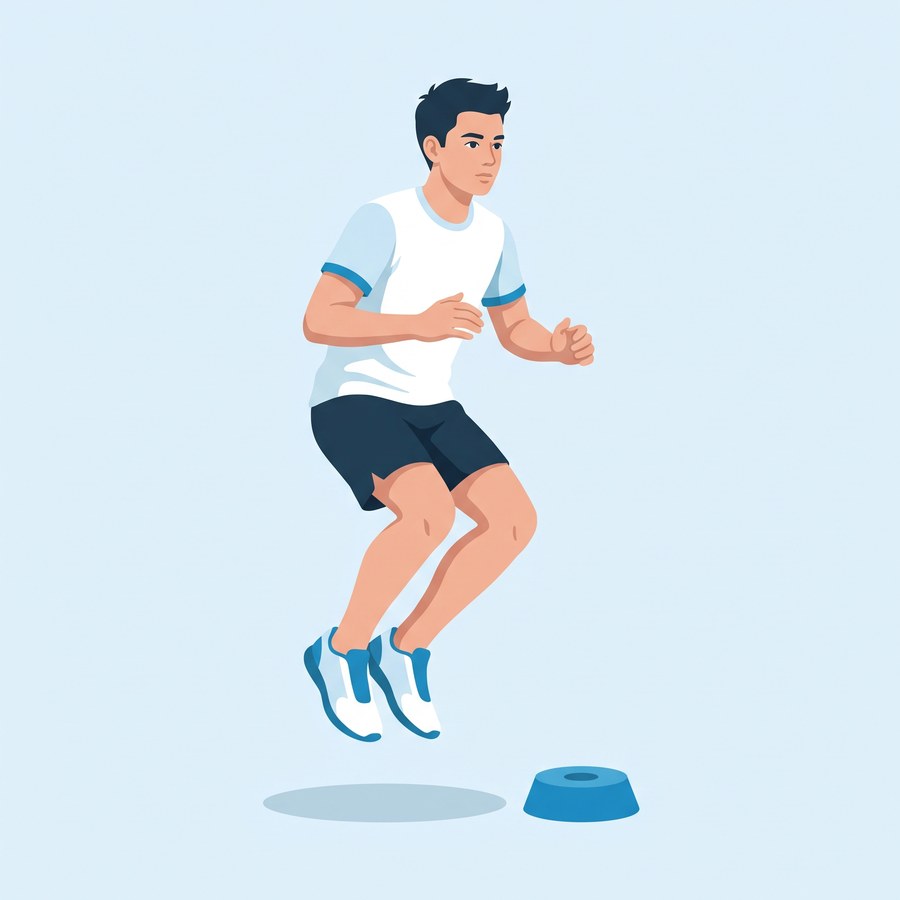
Lateral hop over a cone. Quick sideways hops over a low cone — soft landing on the balls of the feet, knees bent, no side-to-side collapse. The published program starts beginners over a flat line or a 2-inch cone.

Official program guide: A Practical Guide to the PEP Program (LA84 Foundation).

Program 2: FIFA 11+

FIFA Medical Assessment & Research Centre (F-MARC)
  • ⏱ ~20 minutes
  • 🔁 At least 2× per week, every training session ideally
  • ⚽ Soccer's global standard; 3 difficulty levels
  • 🏆 Ball and pitch — nothing else

The 11+ is the program I have a soft spot for — soccer is the sport that gave me a state title, and it's also the sport where prevention research is deepest. Developed by FIFA's medical research arm, it's a structured warm-up in three parts: running exercises with controlled partner contact (part 1), a circuit of strength, plyometric, and balance exercises in three progressive difficulty levels — planks, side planks, Nordic hamstring curls, single-leg balance, squats, and vertical jumps (part 2), and faster running with planting and cutting movements (part 3). Fifteen exercises, done in order, replacing the standard warm-up.

The evidence. In a published cluster-randomized trial of 1,892 female youth players ages 13–17 (Soligard et al., BMJ 2008), teams running the 11+ had about one-third fewer injuries overall, roughly half the severe injuries, and less than half the overuse injuries of control teams. In a large published trial across NCAA men's college soccer (Silvers-Granelli et al., Clin Orthop Relat Res 2017), teams using the 11+ had about a quarter the rate of ACL injuries of control teams. Published group data; individual results vary.

FIFA 11+ · Strength Two athletes performing a Nordic hamstring curl: one kneels and lowers forward in a straight line from knee to shoulder while a partner anchors the ankles
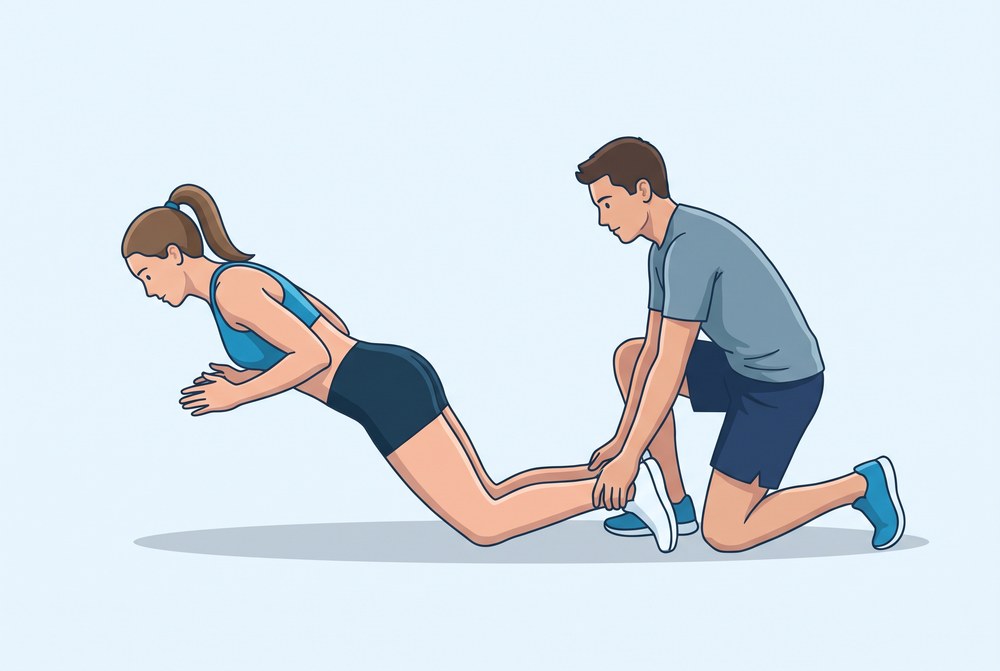
Nordic hamstring curl. Partner anchors the ankles; the athlete lowers forward as slowly as possible with a straight line from knee to shoulder, catching with the hands.
FIFA 11+ · Balance Athlete holding a single-leg balance on a softly bent knee while holding a soccer ball
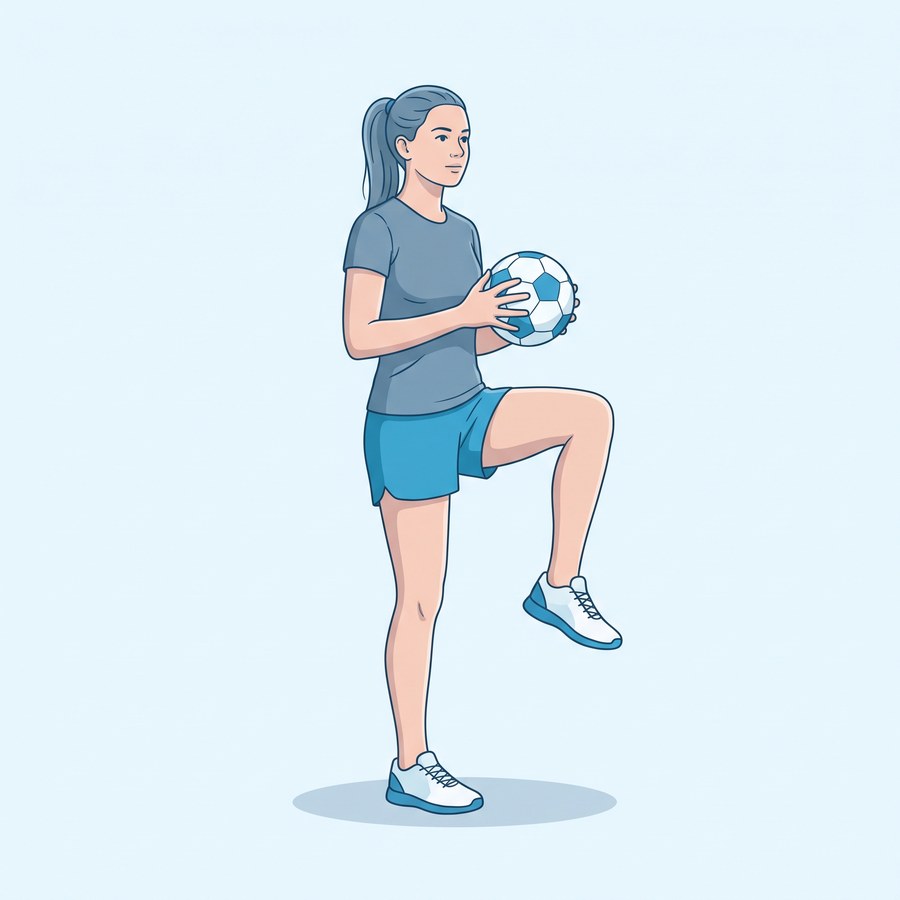
Single-leg balance. Stand tall on one slightly bent knee — hip, knee, and ankle in one line — while passing or catching a ball. Harder than it looks late in a season.

Official program resources: the 11+ exercise materials at Fit to Play (Oslo Sports Trauma Research Center).

Program 3: Sportsmetrics

Cincinnati Sportsmedicine Research & Education Foundation
  • ⏱ ~60–90 min sessions
  • 🔁 3× per week for 6 weeks
  • 🏀 Jump-sport focus: basketball, volleyball, soccer
  • 🎓 Run at certified sites; pre-season block

Sportsmetrics is the oldest of the three — the first ACL prevention program with published controlled data — and it's built differently: not a warm-up, but a dedicated six-week jump-training course, usually run in the off-season or pre-season. Each session pairs a dynamic warm-up with a progressive plyometric block, strength training, and flexibility work. The jump training moves through three phases — technique (weeks 1–2: wall jumps, tuck jumps, broad jumps with stuck landings), fundamentals (weeks 3–4: adding direction changes and single-leg work), and performance (weeks 5–6: multi-directional hops and maximum-effort jumps with quick turnover).

The evidence. In the original published biomechanics study (Hewett et al., Am J Sports Med 1996), six weeks of this training lowered peak landing forces by about 22% and cut side-to-side knee moments — the “knock-knee” load — roughly in half in female athletes, while increasing hamstring strength. The follow-up prospective study (Hewett et al., Am J Sports Med 1999) tracked 1,263 high school athletes through a season: the untrained group had a 3.6× higher rate of serious knee injury than the trained group — and once trained, that group's injury rate was no longer statistically different from the male athletes in the study. Training closed the gap. Published findings; individual results vary.

Sportsmetrics · Jump training Athlete at the peak of a tuck jump with both knees pulled up toward the chest
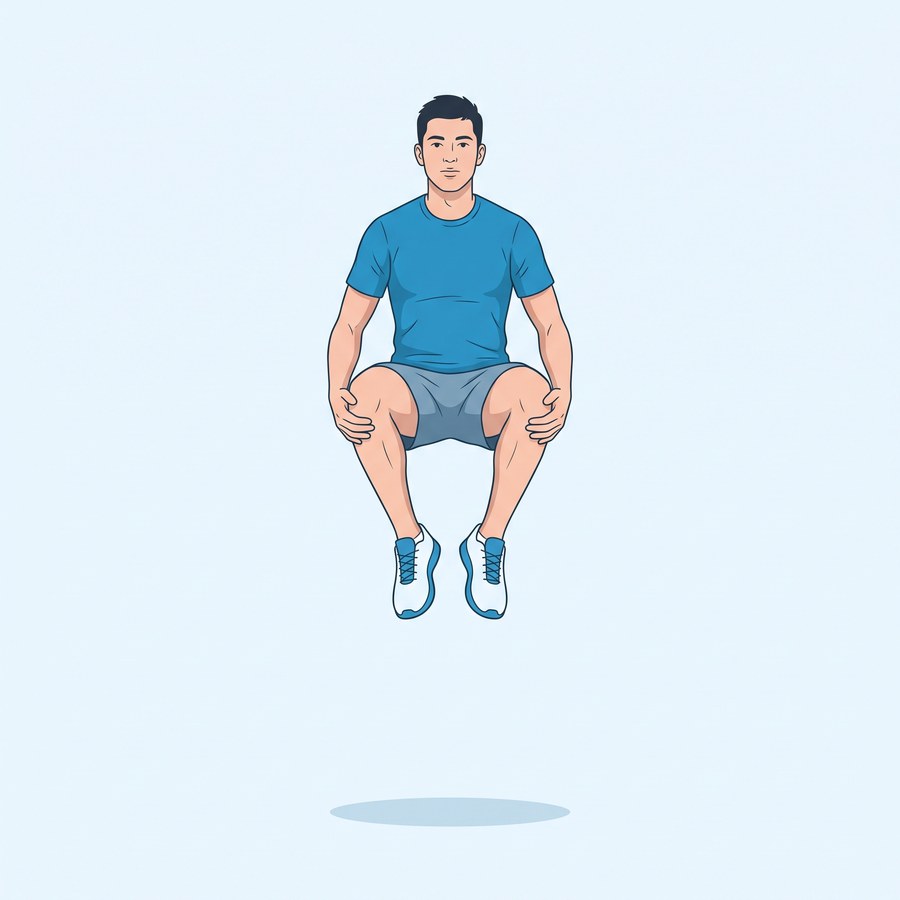
Tuck jump. Straight up, knees pulled toward the chest, then a quiet, bent-knee landing in the same spot. The program's own test: could you hold the landing for a photo?
Sportsmetrics · Landing test Athlete holding a deep, balanced stuck landing with hips back and knees tracking over the toes
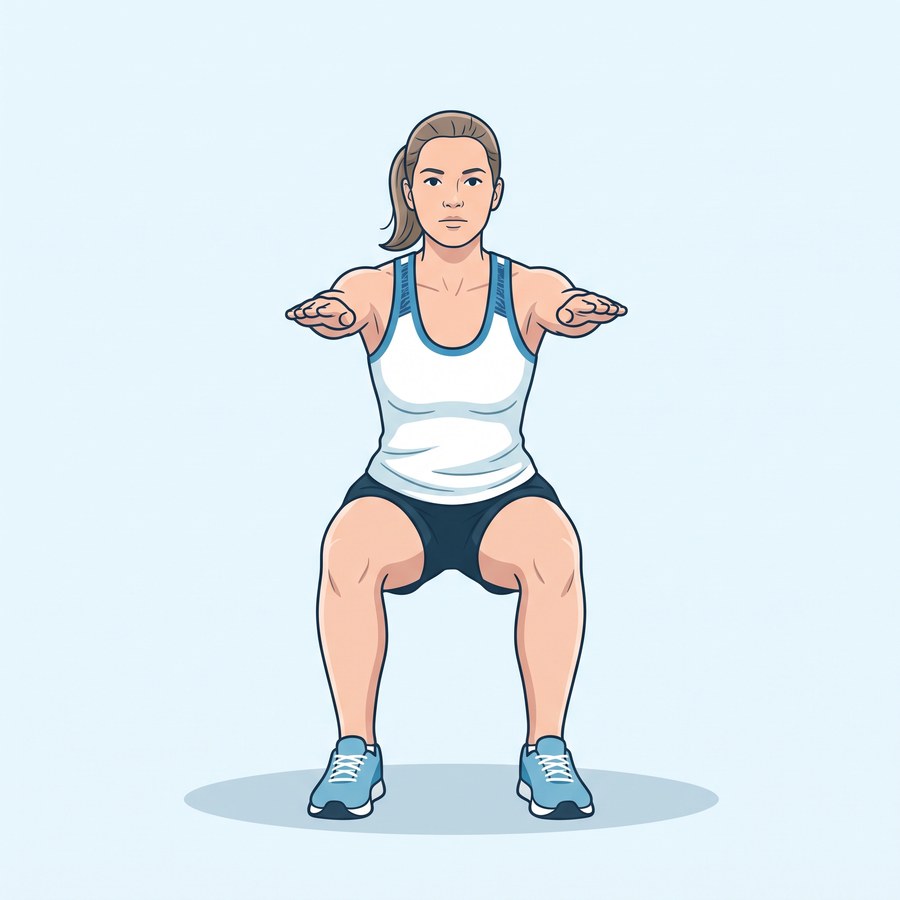
The stuck landing. Deep, balanced, silent — hips absorbing the load, knees tracking over the toes. Sportsmetrics drills this position until it's automatic.

Official program resources and certified-site locator: sportsmetrics.org.
How to pick an ACL injury prevention program for your team

All three programs train the same core skills — landing mechanics, hamstring and hip strength, balance, and controlled cutting. The honest answer is that the best program is the one your team will actually do. Here's how they compare:

PEPFIFA 11+Sportsmetrics
FormatWarm-up replacementWarm-up replacementStand-alone 6-week course
Time15–20 min~20 min~60–90 min/session
Frequency3×/week, all seasonEvery training session (2×/week minimum)3×/week for 6 weeks
Best fitSoccer and field-sport teams that want zero equipmentSoccer clubs; progressive levels keep older teams challengedJump-heavy sports (basketball, volleyball) with an off-season window
Who leads itCoach or AT, off the printed guideCoach or AT, off the official materialsCertified instructor / trained AT
When to startFirst practice of pre-seasonFirst practice of pre-seasonThe 6 weeks before the season

Whichever you pick, the implementation rules are the same:

  • Start in pre-season, not mid-season. For fall sports in the Tri-Cities, that means the first week of August practices — or better, the weeks before. Movement patterns need reps before the games start counting.
  • Protect the two-a-week floor. Published analyses consistently tie the benefit to compliance: teams that actually perform their program at the recommended frequency see the published risk reductions; teams that let it slide don't. Reporting on the prevention literature notes that athletes captured the protective benefit when they completed roughly three-quarters of the recommended sessions. Under twice a week, you're mostly stretching.
  • Make it the warm-up, not homework. PEP and the 11+ are designed to replace the lap-and-static-stretch routine, not add to it. Programs survive when they cost the team zero extra minutes.
  • Coach the cues, not just the drills. Soft, quiet landings. Knees over toes. Chest up. A program done sloppily is a stretching session; the technique corrections are where the protection comes from.
  • Scale for age. Around ages 11–12 is a reasonable time to start basic landing work; keep pre-teens on two-foot landings over a line or flat cone, per the PEP program's own guidance, and progress single-leg work only when control is there.
  • Route pain to an exam, not through it. These programs are for healthy athletes. An athlete with current knee pain, swelling, instability, or a past injury that never got looked at should be evaluated before jumping into plyometrics — and an athlete recovering from an ACL injury needs a supervised rehab progression, not a prevention warm-up. Our ACL reconstruction recovery guide covers that road.

One more thing, because I watch teams warm up from the sideline on Friday nights: prevention isn't flashy. Nobody claps for a well-coached lunge in week nine. It's fifteen minutes of discipline, three times a week, for a whole season — and published studies show that discipline cuts ACL injuries roughly in half. That trade should be easy.

Tri-Cities coaches and athletic trainers

If your program in Kennewick, Richland, Pasco, or the surrounding area wants help getting one of these warm-ups off the ground — or a sports medicine set of eyes on a movement screen — reach out through Tri-City Orthopedics. This is the part of the job I'd do for free.

Dr. Shayne Kelly, DO
About Dr. Shayne Kelly, DO

Board-certified orthopedic surgeon, fellowship-trained in sports medicine at the University of Missouri, where he helped care for Division I athletes as a team physician. A Pasco High three-sport All-State athlete and 2007 state soccer champion, he practices at Tri-City Orthopedics in Kennewick and covers local high school sidelines. He treats ACL injuries and performs ACL reconstruction — and would rather your athlete never need either page.

Common questions from parents and coaches

What age should athletes start ACL prevention training?
Many published authors recommend starting basic landing and balance work around ages 11–12 — before the adolescent growth spurt, while movement habits are still forming. A published meta-analysis in female athletes (Myer et al., 2013) found the programs cut knee injury odds by about 72% in athletes 18 and under, while starting after age 18 showed no significant effect. Younger kids should stick to two-foot landings over a line or flat cone and progress only with good control. Individual results vary.
How much do these programs actually reduce ACL injuries?
A published meta-analysis pooling the major trials (Webster & Hewett, 2018) found about a 50% reduction in all ACL injuries across all athletes, and about a 67% reduction in non-contact ACL injuries in female athletes. Individual program studies range higher and lower. These are group averages from published studies — no program eliminates risk for any individual athlete.
Do ACL prevention programs work for boys too?
Yes. The biggest published trial in men — NCAA college soccer players using the FIFA 11+ (Silvers-Granelli et al., 2017) — found roughly a quarter the ACL injury rate of control teams. The mechanics being trained are the same in every athlete, and the published benefit shows up across both boys' and girls' teams. Run it with the whole roster.
How often does the team need to do it, and for how long?
Twice a week is the published floor; three times is better. PEP and FIFA 11+ are designed to replace the normal warm-up for the entire season — about 15–20 minutes. Sportsmetrics is a six-week, three-day-per-week block, usually before the season. The published benefit tracks with compliance: teams that stop doing the program stop getting the protection.
Do we need special equipment or a certified trainer?
For PEP and FIFA 11+, no — a field, a few flat cones, and the free official materials are enough for a coach or athletic trainer to run them. Sportsmetrics is delivered through certified sites and instructors, which adds structure and supervised technique coaching — useful for jump-heavy sports.
My athlete's knees cave inward when they land. Should I worry?
Inward knee collapse on landing — dynamic valgus — is a common, trainable movement habit that any athlete can have, and it's exactly what these programs target. It is a reason to start a program, not a diagnosis. If the knee also hurts, swells, or gives way, that's different: stop adding reps and have it examined.
Can a program guarantee my athlete won't tear an ACL?
No — and be skeptical of anyone who says otherwise. Contact injuries in particular are hard to prevent, and even perfect compliance doesn't reduce anyone's risk to zero. What published studies support is a large reduction in the odds, especially for non-contact tears. That's the honest pitch: better odds, not immunity.
What if a knee injury happens anyway — how fast can we be seen?
Dr. Kelly has same-day and same-week visit opportunities at Tri-City Orthopedics in Kennewick. If an athlete hurts a knee on Friday night, call (509) 460-5588 — the goal is an answer within days, not weeks. Start with the torn ACL guide to know what to watch for in the first 48 hours.

Building a prevention plan — or worried about a knee that already took a hit?

Whether it's a movement screen, a sports medicine consult, or a knee that needs looking at, Dr. Kelly sees athletes at Tri-City Orthopedics in Kennewick — with same-day and same-week visit opportunities.

Sources

  1. Becker's Spine Review: The ACL prevention gap orthopedics can't ignore (2026).
  2. Webster KE, Hewett TE. Meta-analysis of meta-analyses of ACL injury reduction training programs. J Orthop Res. 2018.
  3. Mandelbaum BR, et al. Effectiveness of a neuromuscular and proprioceptive training program in preventing ACL injuries in female athletes: 2-year follow-up. Am J Sports Med. 2005.
  4. Gilchrist J, et al. A randomized controlled trial to prevent noncontact ACL injury in female collegiate soccer players. Am J Sports Med. 2008.
  5. Soligard T, et al. Comprehensive warm-up programme to prevent injuries in young female footballers: cluster randomised controlled trial. BMJ. 2008.
  6. Silvers-Granelli HJ, et al. Does the FIFA 11+ injury prevention program reduce the incidence of ACL injury in male soccer players? Clin Orthop Relat Res. 2017.
  7. Hewett TE, et al. Plyometric training in female athletes: decreased impact forces and increased hamstring torques. Am J Sports Med. 1996.
  8. Hewett TE, et al. The effect of neuromuscular training on the incidence of knee injury in female athletes: a prospective study. Am J Sports Med. 1999.
  9. Hewett TE, et al. Biomechanical measures of neuromuscular control and valgus loading of the knee predict ACL injury risk in female athletes. Am J Sports Med. 2005.
  10. Myer GD, et al. The influence of age on the effectiveness of neuromuscular training to reduce ACL injury in female athletes: a meta-analysis. Am J Sports Med. 2013.
  11. Official program materials: PEP Program guide (LA84 Foundation) · FIFA 11+ at Fit to Play · Sportsmetrics.

This article is for general educational purposes only and is not medical advice. It does not replace a professional evaluation, diagnosis, or treatment, and reading it does not create a doctor-patient relationship. Statistics cited are group results from published studies; individual results vary, and no training program eliminates injury risk. Exercise images are educational illustrations, not instruction — follow the official program materials and supervise young athletes. For guidance about your specific situation, talk with Dr. Kelly or a qualified healthcare provider. If you think you have a medical emergency, call 911.