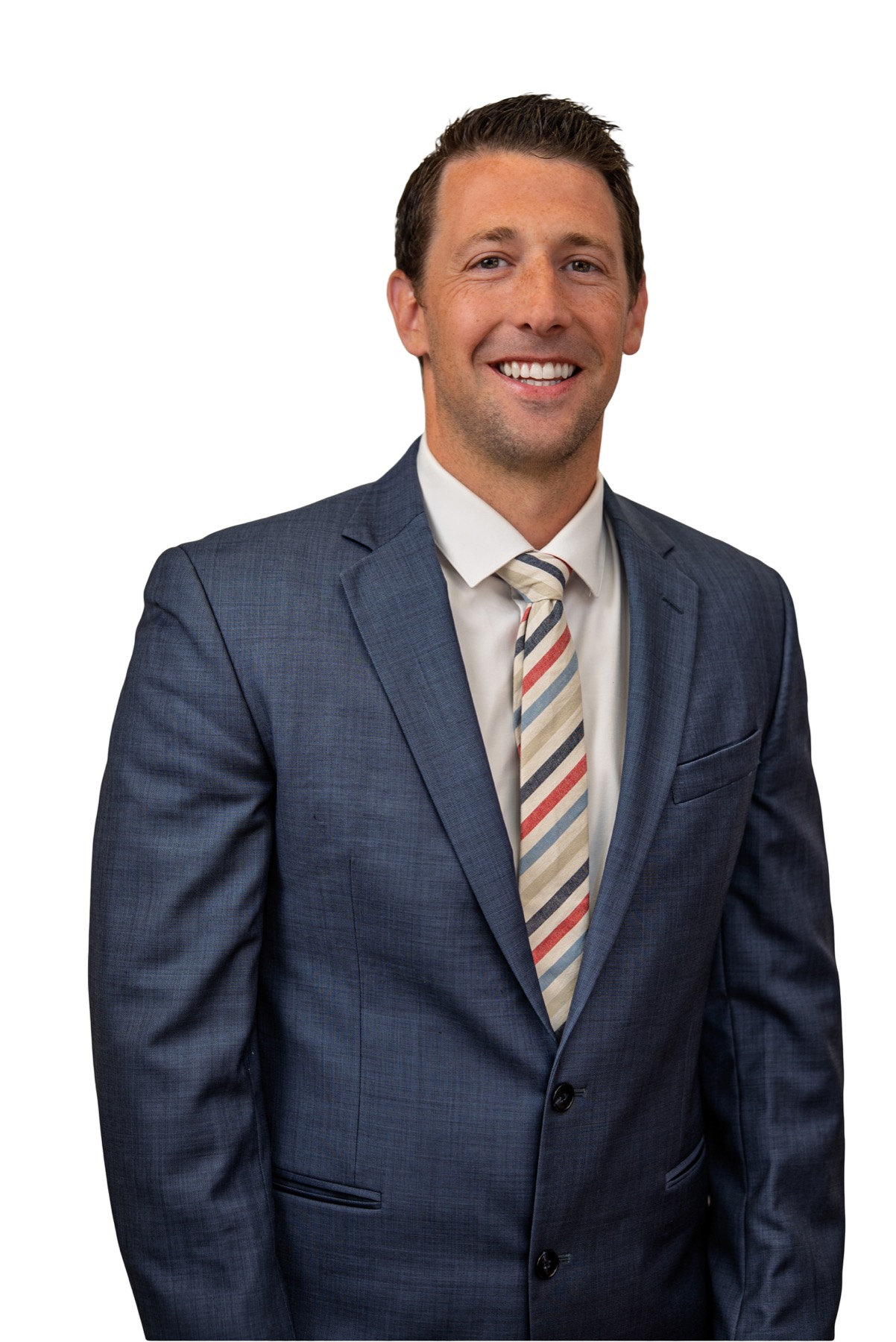
Straight answers about rotator cuff repair from a fellowship-trained sports medicine surgeon serving the Tri-Cities — how to know if you tore it, whether it can heal on its own, and when surgery is worth it.
The rotator cuff is your shoulder's engine.
The rotator cuff is a group of four muscles and tendons that stabilize the shoulder and power overhead motion. When one or more of these tendons tears — from an acute injury or gradual wear — the shoulder loses strength and becomes painful. If you're searching for a rotator cuff surgeon in the Tri-Cities, this page walks through the questions that actually matter.
Rotator cuff tears are extremely common — throwers, lifters, farmers, tradespeople, and anyone whose work or sport lives overhead. Tears range from partial-thickness (the tendon is damaged but still attached) to full-thickness tears where the tendon pulls completely off the bone.
Not all rotator cuff tears require surgery — many partial tears respond well to rehabilitation. But significant full-thickness tears in active patients, and tears that fail to improve with conservative treatment, often benefit from surgical repair.
Symptoms of a rotator cuff tear:
- Pain reaching overhead or behind your back
- Weakness when lifting the arm or rotating outward
- Night pain — waking up when rolling onto the shoulder
- Clicking or catching with arm motion
- Acute tear: sudden sharp pain after a fall or forced motion
MRI identifies tear size, location, retraction, and muscle quality — the facts that drive the treatment decision.
How do I know if I tore my rotator cuff?
The three most common signs of a rotator cuff tear are night pain, weakness with the arm away from the body, and shoulder pain that has lasted more than a few weeks without improving.
- Night pain. You can't lie on that side, and the shoulder aches even when you're still — more on this below.
- Weakness away from the body. Reaching a high shelf, pouring coffee, doing your hair — motions with the arm out and away from your side feel weak or painful.
- Pain that isn't improving. A sore shoulder after a heavy weekend is one thing. A shoulder that still hurts the same — or worse — after several weeks is telling you something.
There's also the sudden version: a fall, a hard yank, or a forced motion followed by immediate sharp pain and weakness. Acute traumatic tears tend to be more time-sensitive than wear-and-tear ones.
One honest caveat: no checklist — including this one — can diagnose your shoulder. Impingement, bursitis, frozen shoulder, and arthritis can all feel similar from the inside of a bad night; an exam and, when needed, an MRI are what separate them.
Why does a torn rotator cuff hurt more at night?
Night pain is often the loudest symptom of a rotator cuff problem: when you lie down, pressure shifts around the inflamed tendon and bursa, and rolling onto the shoulder compresses tissue that's already irritated. During the day your arm hangs at your side and your brain has other things to do. At 2 a.m., neither is true.
If your shoulder has been choosing your sleep position for you — or waking you up every time you roll over — you're in the most common club in shoulder medicine. Published studies link ongoing shoulder night pain with worse mood, energy, and overall quality of life — sleep is not a side issue. For many patients, getting a full night's sleep back is the biggest single win of treatment, whichever treatment that turns out to be.
In the short term, many patients get by sleeping slightly propped up or with a pillow supporting the affected arm — what helps varies, and none of it substitutes for finding out why the shoulder hurts. A rough rule of thumb: a bad night here and there happens to everyone; a shoulder that has been waking you up for several weeks — especially with weakness reaching or lifting — deserves an evaluation.
Will a torn rotator cuff heal by itself?
No — a fully torn rotator cuff tendon does not reattach to the bone on its own. But that's not the whole story, and it's not automatically a reason for surgery.
Plenty of tears — especially partial tears and smaller full-thickness tears — become pain-free with physical therapy that strengthens the muscles around the tear, and never need an operation. The tendon is still torn on the MRI, but the shoulder works and doesn't hurt — for many people, that's a win.
The catch is time. Some full-thickness tears enlarge over months to years: the tendon retracts away from the bone and the muscle it belongs to weakens and loses quality. A tear that was straightforward to fix can slowly become one that isn't. That's the part nobody tells you when the advice is "just rest it and see."
So the honest framing is this: skipping surgery is often the right call. Skipping the evaluation is the risky one — because the evaluation is what tells you which kind of tear you have while every option is still open.
What happens if a rotator cuff tear is not repaired?
Many rotator cuff tears do fine without surgery — but some full-thickness tears enlarge over time, the tendon retracts, and the muscle weakens, which can narrow your options later.
In the harder cases, a chronically retracted tear with poor muscle quality may no longer be repairable in the standard way. Watching and waiting can be a fine plan — but it should be a plan, made with an MRI on the screen, not a default that happens because the shoulder got ignored for a year.
Is rotator cuff surgery worth it?
It depends on three things: the tear, you, and time.
1. The tear. Partial tears and many smaller tears often do well with therapy alone — no operation. Large, acute, or retracted full-thickness tears are a different conversation. Size, location, and muscle quality on MRI do a lot of the deciding.
2. You. Your age, your work, your sport, and what you need that arm to do. A tear that's manageable in one person's life can be a real problem in another's. The MRI matters — but so does whether you throw, lift, farm, or climb ladders for a living.
3. Time. The part people miss. Some full tears pull back and weaken over months to years, and a tear that was straightforward to fix can become one that isn't. Time is a variable in the decision — not a neutral bystander.
This is one of the most-asked shoulder questions on the internet — and the answers that rank are mostly not good. A peer-reviewed 2023 analysis of the questions people ask Google about rotator cuff repair found this question and "What happens if a rotator cuff is not repaired?" at the top of the list — and graded the ranking answers' overall reliability as poor. This page answers them the way Dr. Kelly does in clinic: it depends on your tear, your life, and your timeline.
Source: published analysis of "People Also Ask" search results for rotator cuff repair — PMC10030981.
Surgery vs. non-surgical treatment.
The right treatment depends on tear size, tissue quality, your activity level, and how long you've had symptoms. Dr. Kelly walks you through the options — and the MRI — at your consultation.
- Non-Surgical First. Partial tears and small full-thickness tears in lower-demand patients often improve with physical therapy, activity modification, and occasionally a steroid injection. When it's appropriate, this is always explored first.
- Arthroscopic Repair. Full-thickness tears in active patients, tears that failed rehabilitation, and acute traumatic tears are typically repaired arthroscopically. Suture anchors reattach the tendon to the bone through small incisions.
- Biologics (PRP). PRP (platelet-rich plasma) may be considered to augment partial-tear healing or alongside surgical repair in selected cases. The evidence here is still evolving and results vary — it's an adjunct, not a substitute for the decision above.
Rotator cuff repair in the Tri-Cities: what to expect.
As a fellowship-trained sports medicine surgeon at Tri-City Orthopedics in Kennewick, Dr. Kelly performs rotator cuff repair arthroscopically through 3–4 small incisions, reattaching the torn tendon to the bone with suture anchors and recreating the tendon's native footprint.
Procedure time varies by tear size and complexity — typically 1–2 hours as outpatient surgery. You go home the same day in a sling. Large or complex tears may require additional techniques or open-assisted surgery; Dr. Kelly discusses the approach in advance based on your MRI findings.
The arc, step by step:
- MRI evaluation. Tear size, location, retraction, and muscle quality are evaluated. This determines whether repair is feasible and guides the surgical approach.
- Outpatient arthroscopic repair. Tendon reattachment with suture anchors through small incisions. Bursectomy and acromioplasty are often performed at the same time. Same-day discharge in a sling.
- Sling & protected motion (0–6 wks). A sling protects the repair, typically for 4–6 weeks. Gentle pendulum exercises usually begin in the first week. Therapy focuses on preventing stiffness without overloading the healing tendon.
- Strengthening & return to activity. Active strengthening typically begins around 3 months. Most patients return to overhead sport and heavy labor around 5–6 months. Full tendon maturation takes up to 12 months.
Recovery is a commitment — the repaired tendon heals on biology's schedule, not the calendar's. Most patients wear a sling for 4–6 weeks, start true strengthening around 3 months, and return to overhead sport and heavy labor around 5–6 months — with full tendon maturation taking up to 12 months. Your own protocol, set by Dr. Kelly and your physical therapist, is the one that counts. The phase-by-phase details live in the recovery guide.
One more honest note: coming back is mental as well as physical. In published studies, fear of re-injury is one of the most common reasons athletes don't return to their sport — even after they're physically cleared. A clear plan and honest milestones at every visit are how that gets managed.
Why Dr. Kelly
"I've been the patient I now treat — I know what it takes to compete, and I know what it takes to get back."
Fellowship-trained at the University of Missouri, Dr. Kelly served as team physician for Division I programs including football, basketball, and baseball — treating the same injuries at the highest level of college athletics. He came home to the Tri-Cities to bring that same standard of care to every patient he sees.
- Mizzou. D1 team physician — football, basketball, baseball. Sports medicine at the highest level of college athletics.
- Fellowship. Orthopedic sports medicine fellowship, University of Missouri. Board-certified orthopedic surgeon.
- All-State. Three-sport All-State athlete at Pasco High — he understands what it means to compete and what it takes to return.